
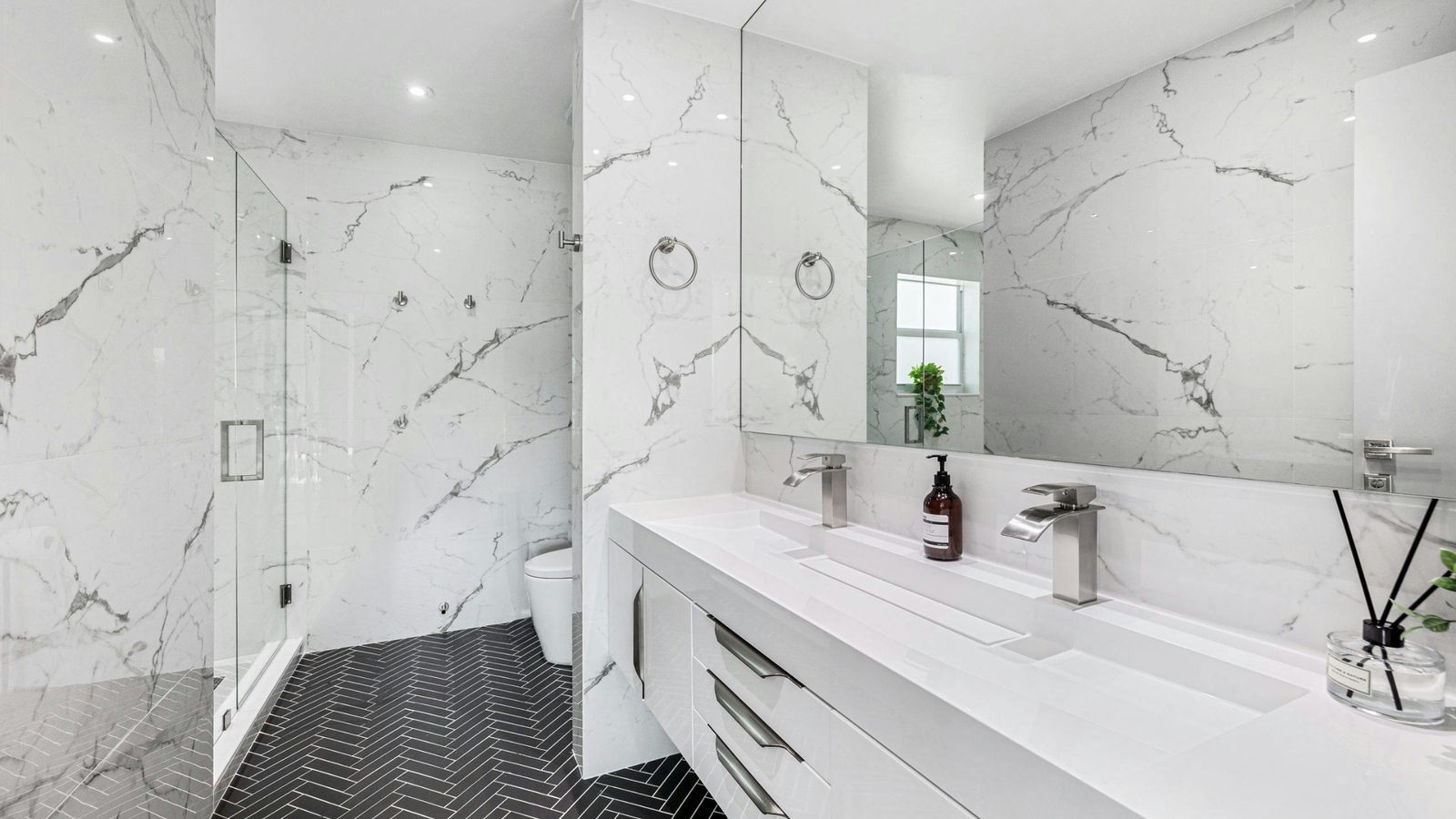

A bathroom fan should be chosen based on the size of the room, air flow (m³/h), noise level, and additional features such as a humidity sensor or timer. A properly selected fan in the bathroom will help ensure good air quality and protection against excess moisture and mold.
In the article, we will discuss what these devices can be and how to choose a bathroom fan so that it demonstrates its maximum benefits.
Table of contents
Why is a bathroom fan necessary for humidity control?
A bathroom fan is essential because it removes excess moisture and significantly reduces the risk of mold.. And excess moisture in this room of the house is a very common phenomenon, because after bathing and washing, steam accumulates, and in the absence of proper ventilation, it does not leave the room.
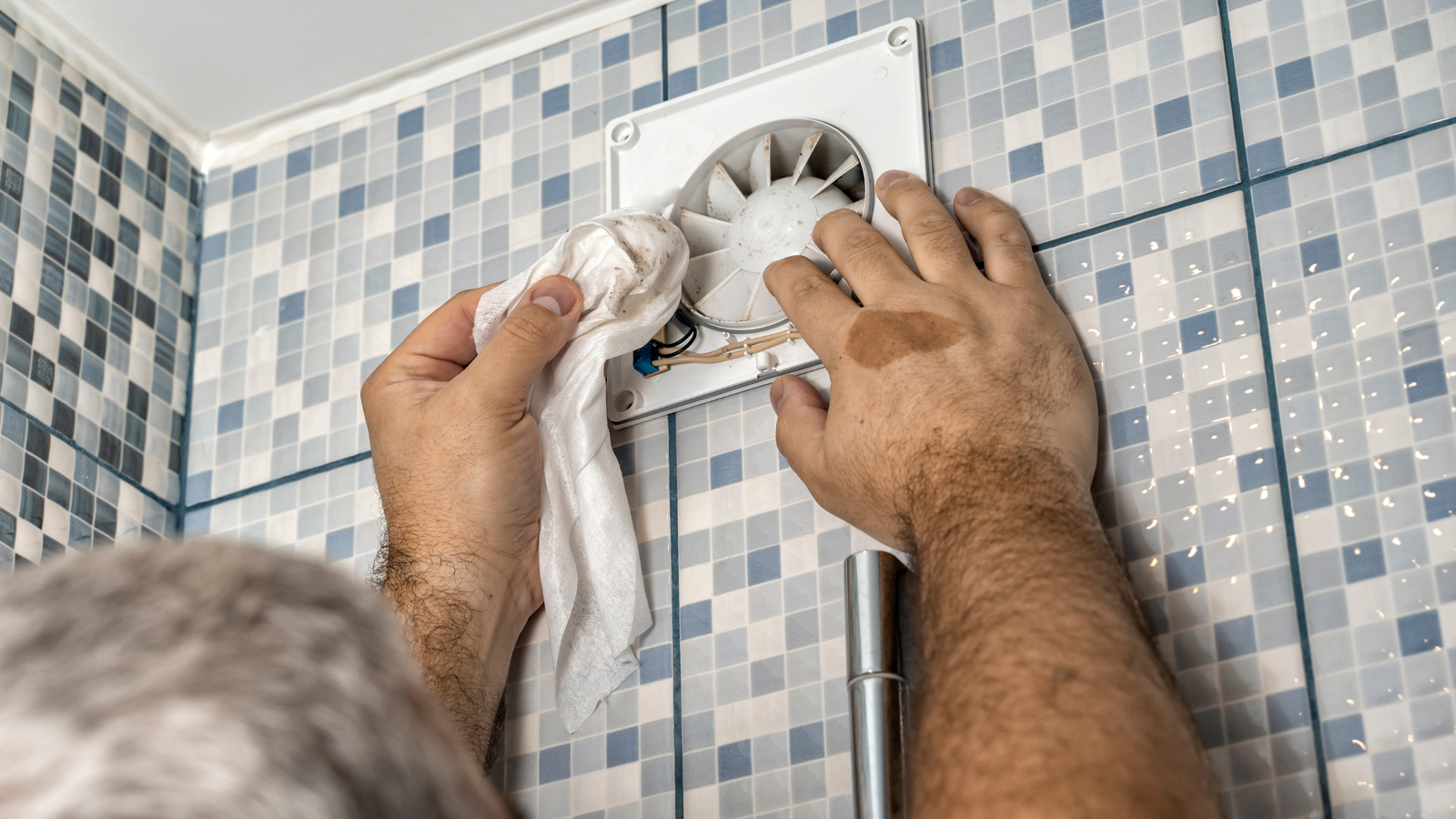
Removing excess moisture is important because:
- Humidity is the main cause, Why does mold appear in the house?;
- it causes windows to fog up;
- may contribute to damage to furniture and bathroom finishes;
- negatively affects indoor air quality;
- causes an unpleasant damp smell.
So while a bathroom exhaust fan will increase comfort in this room, its most important function is humidity control.
What are bathroom fans?
Bathroom fans vary in their operating principle, additional features, and installation method. Let's discuss the features of the main types of fans to help you choose the most suitable option:
- Axial fan. A particularly popular choice for small bathrooms. Mounted in the ventilation duct. Suitable for both houses and apartments, quiet operation, relatively inexpensive and easy to install.
- Centrifugal fan. Demonstrates stronger traction, suitable for longer ducts, often chosen for larger bathrooms. Powerful, effectively removes even greater amounts of moisture, suitable for complex ventilation systems.
- Duct fan. This type of device is installed inside ventilation ducts. Duct fans are often chosen for larger homes or when multiple rooms need to be ventilated at the same time.
- Bathrooms fan with humidity sensor. Convenient in that they automatically turn on when the humidity level in the room exceeds the norm. A practical solution, they save electricity and maintain without much effort optimal humidity level in the bathroom.
- Bathrooms fan with timer. These fans continue to operate for a while after the bathroom lights are turned off, then automatically turn off. This saves electricity, eliminates the need to manually turn off the device, and ensures the removal of moisture remaining after bathing.
- Bathrooms fan with in reverse valve. Devices with a safety valve ensure that air from the ventilation duct does not return back. This function is especially useful in apartment buildings - it prevents both unpleasant odors and cold air from entering the premises.
How to choose a bathroom fan?
To choose the right fan, you need to consider the size of the room it will be used for, what kind of ventilation system it will use, what additional functions are relevant, etc.
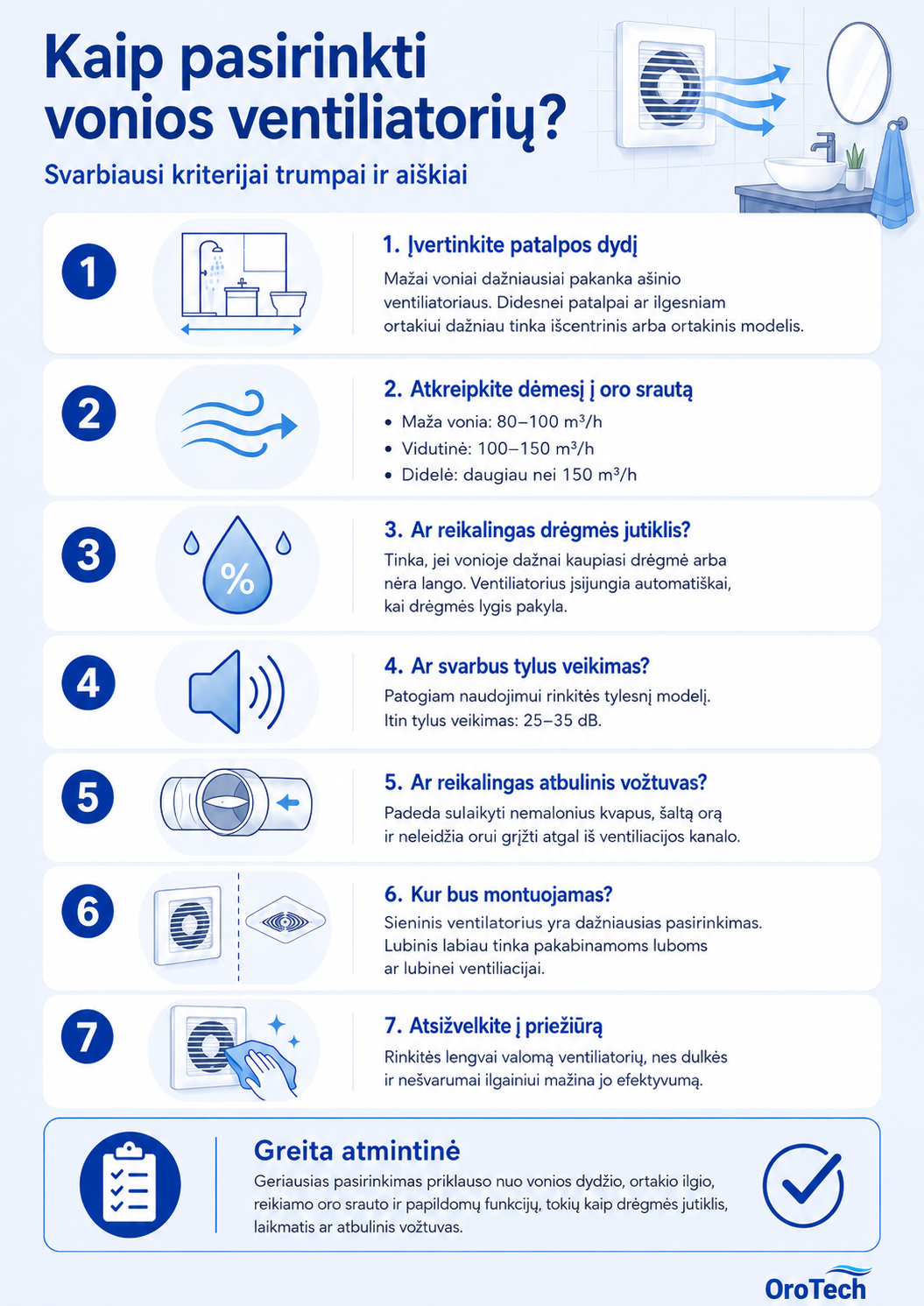
Estimate the size of the room
The larger the bathroom, the more powerful the fan will be to meet your needs. A standard axial model will be sufficient for a small bathroom, but if the room is larger, a centrifugal or ducted model will be a better option.
Pay attention to the airflow
This parameter reflects the fan's performance - it shows how much air (m³) the device removes in one hour.. For small bathrooms, an air flow of 80–100 m3/h will be sufficient, for medium-sized bathrooms, choose devices with an air flow of 100–150 m3/h, and for large bathrooms, an air flow of more than 150 m3/h is required.
Is a humidity sensor needed?
Bathroom fans with humidity sensors turn on and off automatically, responding to the humidity level in the room.. A very convenient solution, because you won't have to worry about turning the device on and off yourself. It will be especially useful for families, rooms without windows, and frequently used bathrooms.
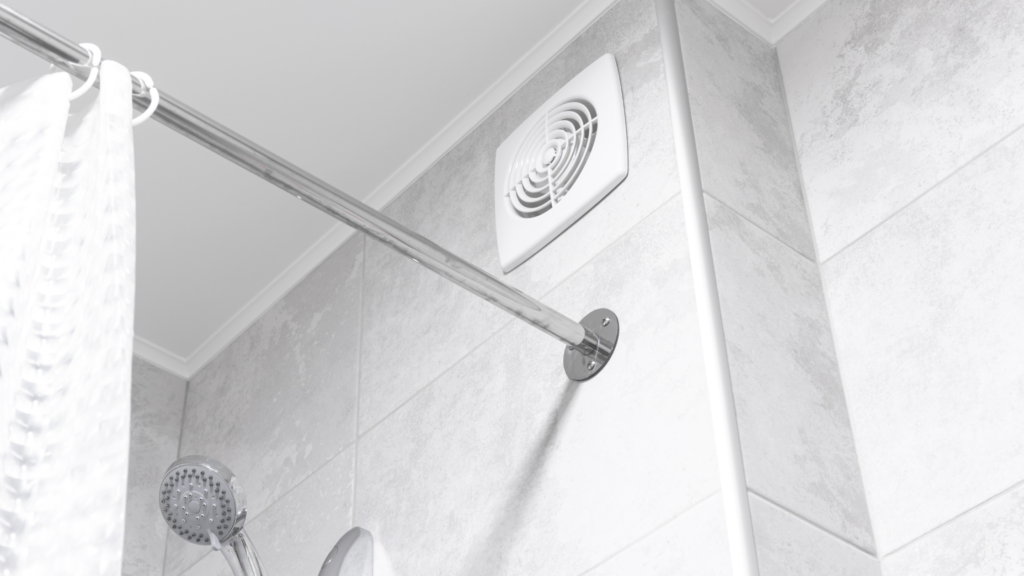
Is quiet operation important?
The quieter the shower or bathtub fan operates, the greater the comfort it provides. If the bathroom is next to a bedroom, children's room or other recreation areas, the quiet operation of the fan will be a big advantage.. This parameter will also provide more comfort in small apartments.
Keep in mind that ultra-quiet operation is considered to be a noise level of 25-35 dB.
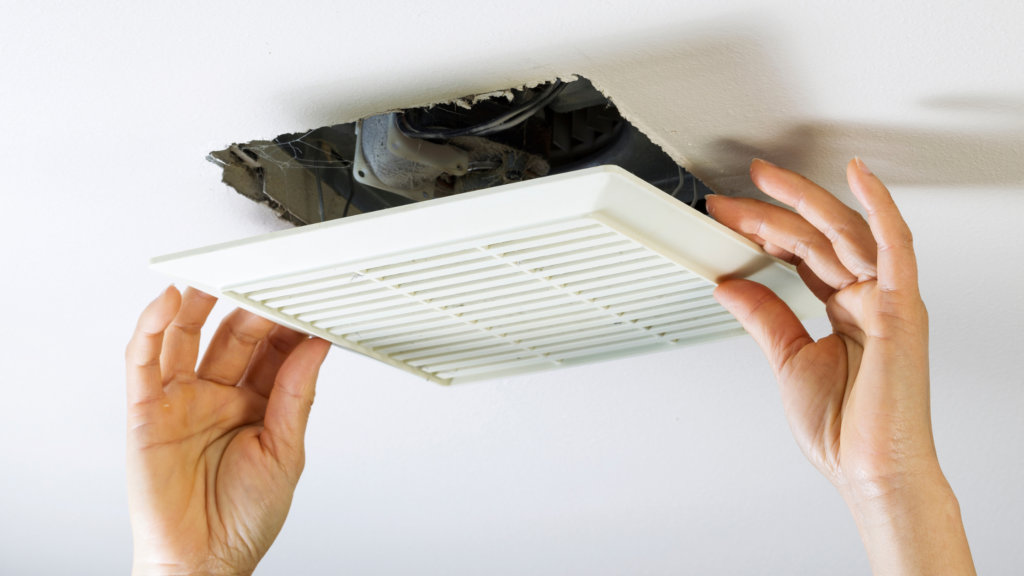
Is a check valve needed?
When there is no check valve, unpleasant odors may appear in the room., sometimes even a draft occurs, so a check valve prevents these problems. An exhaust fan with this feature is a better choice.
Where will it be installed: on the wall or ceiling?
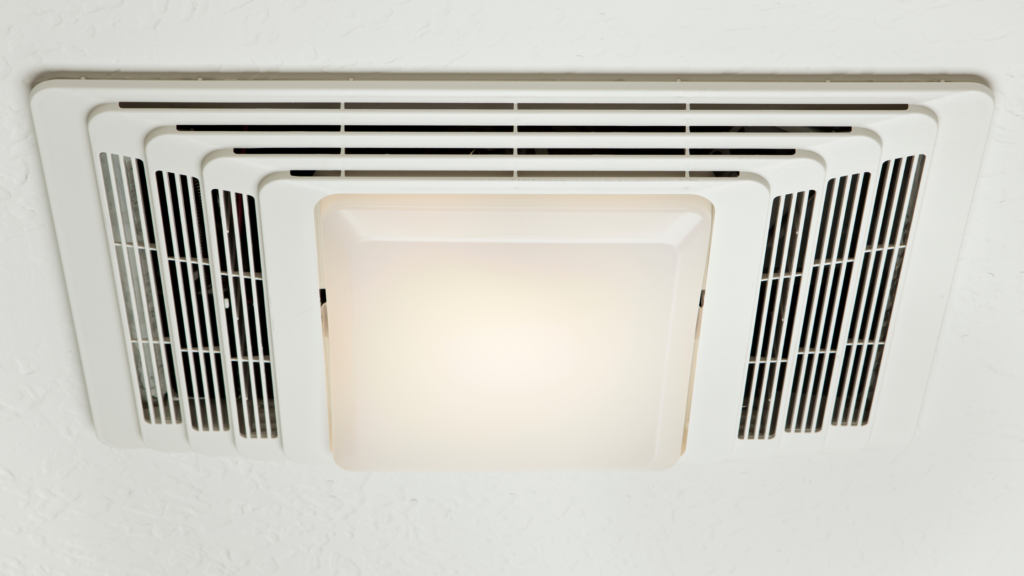
Wall-mounted exhaust fans are more commonly chosen, while ceiling bathroom fans are more suitable for suspended ceilings. or ceiling ventilation. When choosing a device based on this aspect, also consider the layout of the ducts in your home.
Consider the specifics of care
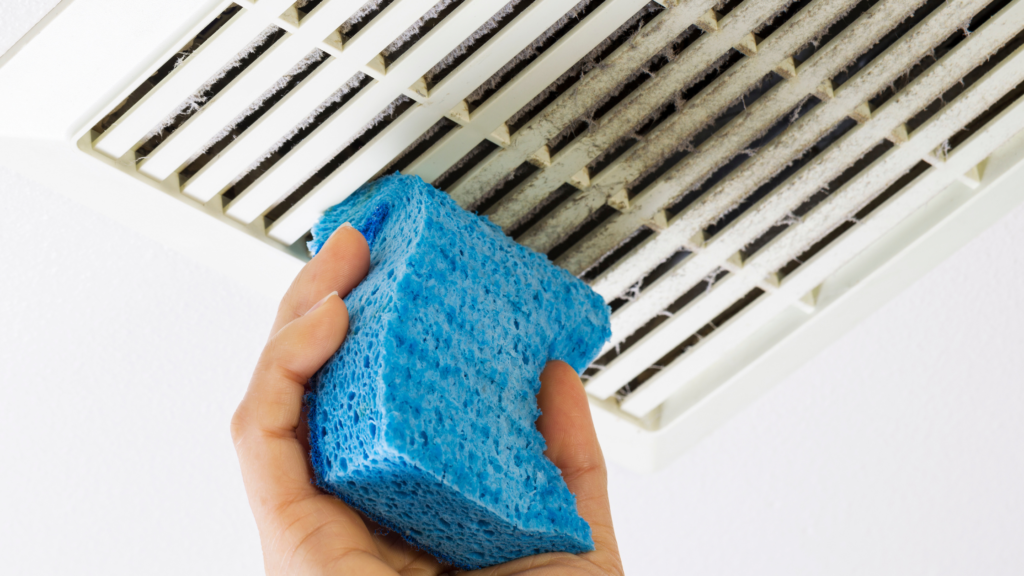
It is recommended to clean the bathroom fan regularly, as moisture, dust, and various dirt accumulate on it.. Prioritize a bathroom fan that is easy to clean, as accumulated dust and other dirt will reduce the efficiency of the device over time and can also increase energy costs.
Where to buy a suitable bathroom fan?
It is best to choose a high-quality, reliable bathroom and/or toilet fan in specialized stores of such equipment. Extremely large Orotech offers a selection of exhaust fans„ – here you will find both standard and more advanced models with additional functions.
Choose a fan with a humidity sensor if moisture constantly accumulates in the room. Look for more powerful models for large rooms, and choose compact fans for small bathrooms.
Before choosing, review the range of fans by functionality and room size - it will be easier to choose the most suitable one, which will effectively help combat excess humidity and ensure a comfortable microclimate.
Frequently asked questions about bathroom fans
What bathroom fan is best for a small bathroom?
For a small bathroom, an axial bathroom fan with an air flow of about 80–100 m³/h is usually sufficient. If there is no window in the bathroom or the humidity remains for a long time after bathing, it is worth choosing a model with a humidity sensor or timer.
What is the difference between an axial, centrifugal and duct fan?
An axial fan is suitable for simple installation in a wall or short ventilation duct. A centrifugal fan has a stronger draft and is more suitable for longer ducts. A duct fan is installed inside the duct and is more often used when more efficient or multi-room ventilation is required.
Is it worth choosing a bathroom fan with a humidity sensor?
Yes, if your bathroom often gets steamy, you don't have a window, or you forget to turn on the fans manually. A humidity sensor allows the fan to turn on automatically when the humidity level in the room rises.
Does a bathroom fan need a check valve?
A check valve is especially useful in apartment buildings and homes where odors, cold air, or drafts can return through the ventilation duct. It helps ensure that air moves in one direction – from the bathroom to the ventilation duct.
What should the airflow of a bathroom fan be?
For a small bathroom, an air flow of 80–100 m³/h is usually sufficient, for a medium-sized bathroom – about 100–150 m³/h, and for a larger bathroom, more than 150 m³/h may be required. When choosing, it is important to consider not only the area of the room, but also the length of the duct, the amount of humidity and the frequency of use.
Why is the bathroom fan working but moisture still builds up?
The most common reasons are too little fan airflow, a clogged ventilation duct, a duct that is too long, insufficient air flow into the room, or an improperly selected fan type. In this case, it is worth checking not only the fan itself, but also the entire air movement path.